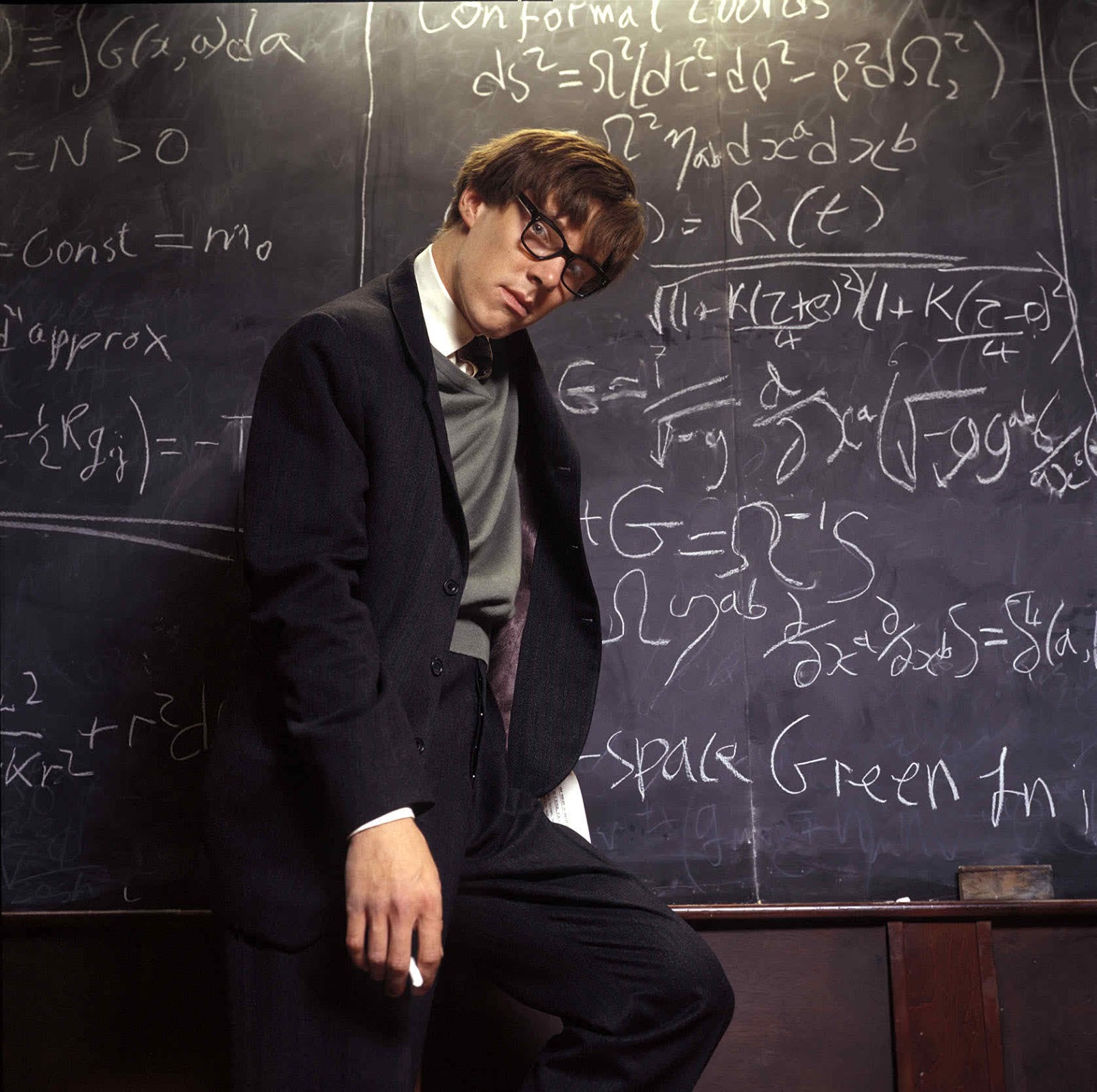
Benedict Cumberbatch portrays a bright kid with a passion for knowledge, mown down by a degenerative disease. We begin with two scientists who are about to accept an award for a discovery. The Nobel Prize.
Stephen endures the science of what we now believe. Which he is destined to shatter with his own discovery.
In the beginning, what we now believe is:
‘There was no beginning of the Universe. Nothing changes. Nothing will ever change.’
In a stylish TV movie version of simulating a behind the scenes interview, two scientists who have discovered something groundbreaking are juxtaposed with Stephen Hawking watching television. On his TV, another scientist expresses a very confident, arrogant, narrow theory about the Universe.
Stephen’s father (Adam Godley) and Stephen’s girlfriend, (Lisa Dillon) have different ways to show their love for him. But his loved ones are loyal and determined to help him live his life, despite his terrible ailment.
The film feels a bit like those British movies about rock stars, but without the drugs and sex.
Roger Penrose (Tom Ward) is a fascinating brain, a friend to Hawking. As if a mind like that can find equals to socialise with. Cumberbatch shows the brilliant mind of Hawking as an incredibly likeable, kind soul. With passion for science, and the pursuit of understanding. He so easily finds wonderful people to celebrate with – even the difficulties of life.
They vastly enjoy aggressive debate, turning over huge concepts and new ways of looking at the world. At first, Hawking applies his mind to testing the ideas of others. The results embarrass one of his Professors. However, his mentor steers him toward original thought.
Penrose is working on a new way of expressing scientific deduction and analysis. It’s faster than calculations. Which is relevant to Hawking because he doesn’t know how much time he has left.
Lots of time is spent studying Hawking’s struggles with both his illness and finding a topic for his thesis.
This is a charming little film fit for television. Both tragic and inspiring. Benedict Cumberbatch shows great range as he wields the role – a difficult character, Stephen Hawking. A brilliant mind. One of the great painful truths is that someone so wonderfully charming is on his way to losing the ability to charm. But not to reason, to scientifically speculate. And to change the world.
 the joy of eating and the folly of thinking