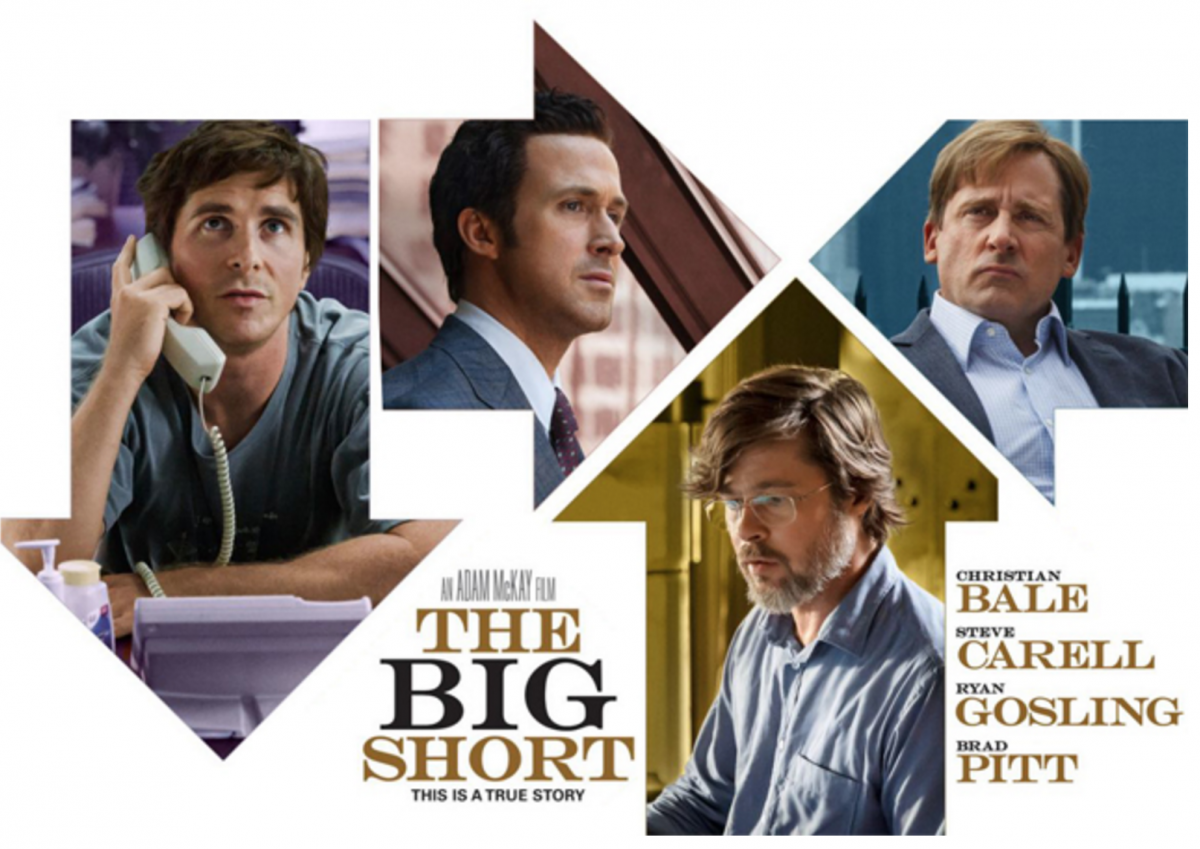
This film, together with Margin Call (2011) are the best depiction available of the subject matter; the real estate crash of (2007-2012) and the shudder of the world’s economy. One of the coolest things about this film is the way it is truly accessible for people with all kinds of backgrounds, especially considering the complexity of the content that is being explored.
This is not a comedy. Rather, it is a quirky, true story about a few heroes, a giant system of frauds and stupid, greedy people. And it’s about the tricky subject of economics – in the same way that Money Ball (2011) is about mathematics.
The performances are brilliant. There are so many interesting and complex characters.
“But you’re happy, when you’re unhappy.”
Steve Carell lets his role consume him as he plays Mark Baum – an abrasive, angry and tired twit; the lovable, Anti-Corruption, dragon slayer, who recently lost someone close to him. He is also really good at his job, even though it is driving him crazy.
Meanwhile, Christian Bale gives us a powerful and effective portrayal of a Pantera/Metallica-loving drummer/fund managing business owner – a brutally honest and socially awkward Professor – the guy who discovers the real estate bubble at the start of the movie.
Two kids trying to make enough money to sit at the big boys’ table (and who started with only a few thousand.) Brad Pitt’s crazy vegan farmer, Ben Rickert – an ex-trader savant, who met one of the kids while walking their dogs together.
And the narrator Ryan Gosling’s Jared Vennett – who is the connection between Professor Mike and dragon slayer (Carell). He brokers the deal that gets things going.
One of the very cool things about this movie is its immensely effective structure – you’ve got a number of protagonists with overlapping and interrelated storylines, which are connected in very complex ways. However, the way it’s structured, makes this complex weaving of stories entirely accessible.
Also some of the complicated concepts about economics are humourously simplified and expressed in interesting and glam ways – such as Margot Robbie in a bubble bath and Anthony Bourdain’s fish metaphor. It’s supposed to be ironic, because the real estate crash was partly due to greedy stupid people committing mass fraud by hiding the fact that worthless bonds were being sold as premium quality – and making the subject so complicated that nobody can understand it, which is how they got away with it. But it also simplifies some of the more complicated aspects of the economic concepts that are important to the story – which makes the film accessible to a wider audience than would otherwise be able to follow it.
The story lacks drama because none of the characters struggle with conflict. Everybody wins. Yes, for the most part of the film, many of our heroes are fighting an uphill battle. We hope they will win and when they do it is satisfying. But there is no real internal, interpersonal or external fight. Rather, the fighting happens before the story begins and the winning happens at the end. It feels like we only see the point at which they all collide and when the major event of the actual crash happens. But we see very few victims. And we never get to see any of the heroes deal with real conflict. Despite some great structural and dramatic writing, much of the potentially dramatic situations are expositional through explanatory narrative dialogue. All of this potential is wasted because you get a really good movie about how these lives affect each other – but you don’t get an epic drama, which it could have been. This was a conscious decision of what to write and what not to write. Something dramatic could have vastly elevated this film – is the only weakness I found.
 the joy of eating and the folly of thinking