Ender’s Game (2013) – Dir: Gavin Hood (X-Men Origins: Wolverine, Tsotsi)

I admit I am kind of happy to see the beginning of the film verbatim as it was in the book.

This film feels G-rated, unlike the intellectually sophisticated, elegant and violent story that it is based on.

Valentine Wiggin (Abigail Breslin) is frail and empty as a character. Ender (Asa Butterfield) is weak and flimsy. Not the brilliant tactician from the book, who grows up in Battle School, to form relationships – deep bonds with his classmates, some of whom were once enemies. This part of the movie moves so fast, there is no time to develop and ingest these emotions.

Ender is not his real name. It is the nickname given to him by his sister who couldn’t pronounce Andrew when they were kids. This among other things, is lost on the film.

Graff (Harrison Ford) is pathetic. He’s supposed to be a tough, callous, aggressive and powerful commander. He just looks tired. He’s meant to be the most intelligent adult in the school, the only one smart enough to know that none of them are half as smart as these kids.

Sir Ben Kingsley screws up Mazer Rackham’s character by playing it straight. Something as quirky as Sexy Beast could have worked.

Dialogue is taken as written from the book without context, presence of character or the psychology of a knowing delivery.

Battle School is where Ender escapes the sadistic and possibly psychotic Peter, who is supposed to be a monster, yet he appears in the film as merely an aggressive bully.

Battle School is where Bean escapes the murderous Achilles (who killed Po, the only person who had ever shown Bean kindness thus far.) It is also an escape from the poverty and starvation of life on the streets of Rotterdam for a skinny, tiny weak little brat, not worth a bean.

In the book, we see how Ender aggressively matures into a young man – a Captain, then a General; a ruthless killer, but a good man; a good soldier. His ascent through Battle School moves by so fast, that people are showing him respect when he didn’t have time to do anything to earn that respect.

Ender is a genius. All the kids in Battle School are geniuses. Ender and his friends are the best of the best, but we need to see this. In the film, Ender comes off as a whiny pussy.

Understanding the aliens is vital, but there is no time for this, there is barely enough time to communicate the relationships in Battle School and the emotional struggles of a few key characters, which fail.

The visual effects for the Giant’s Drink are decent.
Bonzo Madrid (Moises Arias) is a powerful little villain, love the nose. He seems wasted as a character, on a lack of well-prepared situations.

The naked shower fight is supposed to be fatal by design. With this fight resulting in an accident, Ender isn’t changed by the event in the same way. He is not a ruthless killer, surviving rather than submitting. He hasn’t grown up, in this moment.

Petra (Hailee Steinfeld) is a fun character but their friendship barely has time to form. There could have been room for this Battle School period, (which is a large part of the book; and quickly summarised in the movie – losing a lot of the effect,) to be stylised like the military complete with horrific undertones – humiliation, rape, torture, gangs, drugs, embarrassing diseases, maiming, black market, gambling, perversion.

Sticking it to Bonzo by being a better soldier in the Battle Room is satisfying, despite the mundane neons and predictable camera angles.

A Gavin Hood film is bound to look polished. I’m surprised the writing is so weak, adapting to writing for adaptation must be tough.

Unfortunately, he misses out on the opportunities to sell the story with style. Gavin’s transplant of exposition and dialogue from the book is just weak writing, rather than the expression of concepts and characters.

Gavin, perhaps, should have made more cuts, chosen the best concepts and story points and told the best story he could instead of trying to shove everything in.

The Giant’s Drink in the Adventure Game is the best source of drama in the movie. The battle with the aliens/Buggers/Formics, is a great climax, but it’s not the main point of the story. And the secret about the ‘training simulations’ is given away far too easily in the film, when it’s a really cool punchline for the characters in the book.

In the film, we don’t realise that it was Bean who chose the members of Dragon Army for Ender.

The Battle Room in the book, drives Ender and his men to exhaustion, he gives up. He’s had enough. He makes a suicidal effort to throw out all the rules, and miraculously takes the victory, with Bean by his side. ‘The enemy’s gate is down.’

This situation is repeated against the Formics, in an unbeatable situation, Ender and the men (and Petra) are exhausted, sleep-deprived, almost insane, Bean reminds Ender, ‘The enemy’s gate is down.’ It doesn’t mean anything, but it gives Ender the push he needs to throw it all out and launch a crazy attack.

In the movie, Ender and his men never look like they’ve even had a decent workout, let alone torture-level exhaustion, while being forced to beat impossible odds. And winning.

It would be nice if Ender was the ruthless tactician from the books, instead of this whining child. Ender from the books would kick his ass. He would never let himself cry, or be seen as vulnerable.

Now if Ender in the movie had really gone toe to toe with Graff and impressed our humble viewer, it may have been enough to carry the film. But this child has no idea how to stand up to Harrison Ford.

It could have been better, despite the story being ruined in its lazy adaptation, like a child’s translation of A Christmas Carol, for his inebriated Whanau (who refuse to stand up for the play.)

Overall, this movie is disappointing. The books are excellent, especially Speaker for the Dead, Ender’s Shadow, Children of the Mind, Xenocide and the first one of course. The movie is just not staunch and macabre like the book. And without that, the movie feels empty.

It fails in the way that Fellowship of the Ring succeeded. A movie with a sentimental young adventure where there’s no sex, drugs or rock and roll and you aim to make money at the cinema. For this reason some thought Fellowship would fail. But if you’re going to not deliver on some of the edgier aspects of the book you’ve got to fill the empty space with something, you can’t just expect average uncommitted acting to save the day. Especially when the film doesn’t involve any real drama – most of the book is about Ender’s growth as a soldier in battle school – his inner turmoil as he deals with having killed twice before and feels like he’s becoming his older brother who is a monster who tortures domestic animals.

And the younger sister is supposed to be an intellectual equal to Ender yet also an angel in his eyes. Seeing yourself as a killer and dealing with that murderer side of yourself at such a young age, is really just brushed over because the audience was expected to be children. Yet the book is all about how a child deals with adult soldier conflicts. This story is not for children, to think that it was, is Gavin’s most grand mistake.

1 star
Tsotsi (2005) – Dir: Gavin Hood (Ender’s Game, X-Men Origins: Wolverine)

It grips you, the trials of these characters. Thug ‘Tsotsi’ (Presley Chweneyagae) tries to make a name for himself. Crew collapsing in on itself after a murder. Tsotsi, the gangster, hides from the rain. Drawn into the situation, relies on instincts instilled in him since he was young. He reacts as his character should. What will happen to the baby?

His improvisation to care for it draws a laugh at first. (A reminder of Kramer vs Kramer meets Friday, but poor.) The helpless man-child with no clue what to do with a baby. His broken inner self drives him to hunt for blood. For answers. All he finds is other people’s pain. He doesn’t kill for pleasure, he does it only to survive. Butcher (Zenzo Ngqobe) kills so easily. Tsotsi leads the rabble to the punchline, without swaying, his motive is reasonable enough.

It’s about survival, at least on the surface. He uses the knowledge of his ruthlessness to enhance his name. Which is also about survival, but he likes it, as much as he hates his life and himself.

Tsotsi is an easy young man to like, despite the ignorant way he neglects a baby. In South Africa, in a world of poverty, this crime story feels fresh. Tragedy and compassion. Real characters.
Tsotsi relives his childhood pains as he reassesses his life choices. His gormless friends, dumb but somewhat loyal. Some more than others. And a banging soundtrack.

Poverty on a striking scale – from a literal nothing, the ambition it takes to rise up to reach poor. The help Tsotsi finds in Miriam (Terry Pheto) – an innocent woman, is beautiful in her way. This could be better shown. But her native fashion is cute and her quiet creativity is interesting. She is smart enough to be careful.

It takes time for the story to kick into gear – but all the while the characters are fascinating in their cautious ways. The action is killer, yet gradual. Poor Tsotsi. His life is falling down around him, it seems. It’s a tragedy, but at the same time it is the growth of a young man and the pain of his every day.

Aap (Kenneth Nkosi) is a follower, but he’s always been there. Boston (Mothusi Magano) is a brain, but he falls apart after the murder. Tsotsi is a compelling protagonist. A character who rings true, long after the story closes.

The film looks and feels polished, but not artful, though the writing is strong in events and structure. The characters are full and immersive. The dialogue is okay. They play dice for money. Craps. Their lives are modest. Their crew is tight. Ready to take over the neighbourhood. Poised to explode, but fate has better plans for them. Almost reminds me of Japanese films about Asian gangsters – the fraternisation of friends, brothers in crime.

By this story’s conclusion, gentle viewer will have learned the meaning of Tsotsi’s life, and as a result, will have learned the why behind his every choice, every action.

It’s not about money, it’s about keeping on. Making tomorrow a little bit better than today. Reaching for the better house, the better state of life. But when Tsotsi looks at the man with the nice house, he doesn’t feel envy, just opportunity.

These friends, this crew, they’re supposed to go with you when you grow. You’re supposed to succeed together. Life doesn’t work that way. Decency seems like a word thrown too easily and meaning less than the sum total of Tsotsi’s parts.

2.5 stars

Pacific Rim (2013) – Dir: Guillermo del Toro (Pan’s Labyrinth, Hellboy: The Golden Army, The Devil’s Backbone)

I appreciate the exposition of the alien versus mecha theoretical construct, yet the audio feels like it’s been swiped directly from Alien. Jax Teller (Charlie Hunnam – Sons of Anarchy) as our narrator/hero, Raleigh Becket, is somewhat cool. Typecasting be damned, it’s nice to see a sauve gangster taking on aliens and trying to save the world, (against his better nature,) with militaristic means.

I can let settle the clichés of portals and ‘looking in the wrong place for alien life.’ However, too much explanatory narration can be a bore. The FX are pretty sweet – the bigger your screen, the better. The violence is exciting, but not ‘emotionally effective trauma.’ The scientific speculation of a two-pilot control system is well thought out.

The characters come off as slightly shallow. Raleigh, without Jackson Teller’s background, is a staunch badass with a cool accent, nothing deeper. Stringer Bell/Idris Elba, another gangster (The Wire) as Stacker Pentecost is a waste of what little effort he gives to his delivery, of a character that doesn’t make sense with him in the role. The character reads as an uptight control-freak, asshole superior with a heart, to Raleigh. But he doesn’t sell the asshole part. His beautiful patriot/brave new world speech feels stolen directly from ID4.

The visual effects of the neural handshake are boring, though the concept is appealing. (Minority Report and Man of Steel have better visual FX.) The creature designs are reasonably interesting – Aaron Beck-esque insect for the face, mixed with a mechanical Rhino or Hippo. With the occasional alligator tail. A conscious choice appears to have been made to go with influences from creatures that we know, rather than create something wholly original.

There are skipped over concepts of K-pop, J-pop, the media and US pop-culture/hero-worship that could have been more interestingly and deeply explored. Were skipped over, presumably in favour of a more battle-oriented story. However, it’s a story which feels ‘tried’, yet not much true. The fight sequences are impressive.

The competitive conflict between Raleigh and Herc Hansen’s son Chuck (Robert Kazinsky) is weak and ineffectual. Ops Tendo Choi (Clifton Collins Jr. – Capote) is a brilliant actor in a minor role and perhaps could have been a better casting choice for this role.
One of the few interesting characters is the girl, Mako (Rinko Kikuchi) cast as a love interest.

Raleigh respects the girl, even if the writer hasn’t respected her enough to give her a complete character. Her acting is fully committed; she is better than her role.

The clock of doom concept is cool.

The storyline which follows the engineer, Doctor Geiszler (Charlie Day) is actually interesting. Unfortunately it ends predictably. One of the scientists – Gottlieb (Burn Gorman) is a cartoon character, the other is a nerd.

Guillermo can take credit for the fierce battles and joyous visuals. Will he take the credit for the lame characters and bad casting decisions?

I know a lot of girls who would fall in love with a tattooed nerd like Dr. Geiszler, if he were a more recognised and deeply written character.

Dr Geiszler wants to drift (tap into the mind) with one of the aliens – nice idea.

The final conclusion to the film’s story, regrettably, is ridiculously optimistic.

2.5 stars

Accepted (2006) – Dir: Steve Pink (Hot Tub Time Machine – he also wrote High Fidelity and Grosse Point Blank)

Feels like a National Lampoon’s comedy. Bartleby ‘B’ Gaines (Justin Long) keeps quiet about his feelings for Monica (Blake Lively,) due to a fear of being exposed, humiliated by rejection. Justin Long is lively, funny and committed to the role. Bartleby, as a character, is witty and more Ferris Bueller than Ferris Bueller.

Schrader (Jonah Hill) is wound way too tightly and is fixated on following his father’s path into Harmon College (and the fraternity.)

After a fake ID scam, ‘B’ is roped into mowing the lawn at Monica’s parents’ house, because she’s having a party, while they’re away. He agrees, because he’s in love with her. Monica is treating ‘B’ like a nerd, but we do not hate her, because she’s not a bitch. She is actually really sweet.

Hoyt Ambrose (Travis Van Winkle) on the other hand, is the anti-nerd, jock, ass-hole, boyfriend to Monica.

‘B’ writes an anti-conservative essay which gets him rejected from all of the colleges that he applied to. (Quick Question: Why not try a college overseas, “American education is in the shitter.”)

So he decides to create a fake college on paper and gets his friend Schrader to build the website, to fool his dad. Some of Bartleby’s friends didn’t get into college, either. So they join in. And the plan snowballs.

Every good comedy of this style needs an evil villain. Dean Van Horne (Anthony Heald) is excellently putrid. His polar opposite is Ben (Lewis Black.) He used to be a genius, so ‘B’ hires him to pretend to be the Dean of the fake college. Ben is psychotic in a funny way, and a great lecturer of cynical philosophy.

Conservative, sheltered parents put tremendous pressure on kids to over-achieve at all costs; to get good grades, to compete for a good college. Causing themselves stress to the boiling point, over things they don’t even care about. They stress themselves out over things that might not even matter. And they become zombies, slaves to conformity. They are forced to behave like prisoners, and the teachers are guards. In reality, though, education is a service industry. Those kids all paid for an experience. They paid as much as their parents did – paid in fear, blood, sweat and tears, while their parents paid in dollars, on their behalf.

A good college is not a machine. A good college cares for its students. It cares more about the health, well-being and performance of its students, than traditions and discipline. This is college; students should be treated as adults, with respect and compassion, not ruled by fear. Institutions as old as colleges need to stop emulating prisons.

‘B’ and his friends lease an old mental hospital and fix it up as the fake college campus, because his dad wants to drop him off at the college on the first day, when he meets the Dean.

The fun really starts when it turns out that the website for the fake college accepted the applications from hundreds of real students.

Acceptance is just one click away. “But you don’t make it clickable!”

This film makes you feel all sorts of emotions: It’s funny, sexy, tragic, exciting, cool, silly, inspiring, provocative, joyful, and anarchistic. A great soundtrack provides songs that accentuate the mood of every moment.

The story survives on the backs of some great characters. Alongside ‘B’ and Ben are Daryl ‘Hands’ Holloway (Columbus Short) the nice guy with an injured knee, and an interest in phallic wood-sculpting, Maurice (Joe Hursley) the rock star, Glen (Adam Herschman) the crazy fool, Rory (Maria Thayer) the feisty redhead and a few hot chicks.

It’s all about a college with a creative business model and a passionate young founder.

3.5 stars

Traitor (2008) – Dir: Jeffrey Nachmanoff

Despite containing a mystery (which once you’ve seen the film, you know the secret,) Traitor is immensely re-watchable. This is a complex spy game. We know that someone is a traitor, but from whose perspective? Who is the traitor? And did he betray the cause, or his country?

Stuck in a Yemen prison, we are introduced to the Islamic faith and the nature of Samir (Don Cheadle) – the film’s protagonist (driving force.)

This is Don Cheadle at his best, he runs the gamut emotionally. Special Agent Clayton (Guy Pearce) is passionate and focused, smart and deductive. He’s a good guy. But what game is Samir playing? Which mask is his real face?

There is a substantial amount of time and attention paid to the FBI chase, which is important in a spy movie. The viewer needs to understand both sides of the hunt.

Switching back and forth between them and Samir’s troubles in prison, is interesting because the pace is just right. Not so fast that the viewer is disoriented, confused. Not so slow that the viewer feels patronised, or bored.

It is interesting how Samir sets himself up to be rescued by Omar (Saïd Taghmaoui – Three kings) – the person whom he needs to get close to, now he must earn his trust. An argument that sounds convincing to Samir, concludes with the line, “Once upon a time Americans were the terrorists to the British.”

As the story continues, snippets fall into place. Agent Carter (Jeff Daniels) is convincing. Samir is a man of faith. The FBI are playing a fascinating spy game, intricate and enticing. But they’re simply following Samir, he’s the star of this show.

The bomb-making is interesting to watch, fun to see the plan coming together. Then Samir disguises tragedy as triumph, when an attack on a diplomatic building leaves some innocent people dead. It is the British terrorist leader, Fareed (Alyy Khan) who Samir should not trust. This man has contacts watching the FBI. There are moles everywhere. And he does not seem to be a true believer.

The big mission is set and Samir is on the inside. It looks like Special Agent Clayton may be the hero of the story. From his perspective, the bombing proves Samir’s guilt. It seems that Samir is a terrorist, after all. This is what the film is about – where does Samir’s true allegiance lie? And soon the world will shudder.

The game is fun to watch, suspenseful and somewhat unpredictable, as the stakes are raised over, and over again.

Omar is an intriguing character. He’s a nice guy, but it’s not difficult for him to shoot a man dead, a man he doesn’t know (twice to make certain.) And when things get dicey, he tries to talk Fareed out of killing Samir. So we like him, but we also know that he is dangerous.

The ending is really well calculated, thrilling. It’s scary how nowhere is free from terror, how a terrorist cell could be operating anywhere. A person could as easily be a terrorist as a serial killer, right under your nose. The only escape from this feeling of fear, is that certain organisations, and some brave individuals working for them, are fighting this never-ending war to keep you safe.

3 stars

Man of Steel (2013) – Dir: Zack Snyder (300, Watchmen, Sucker Punch)

It’s a little unsettling to begin by watching a woman give birth. We all knew well in advance of this film’s release, that Russell Crowe was going to take up Marlon Brando’s role as Jor-El. Russell rocks the shiznit. However, as good a job as the makers did on this film, a lot of the story moments were similar enough to the original, to feel unnecessary.

On the up-side, Russell is cool, if a little melodramatic. Jor-El’s wife Faora (Antje Traue) is an exotic beauty, but gives a forgettable performance. The appearance of Zod (Michael Shannon) is mighty and villainous. This picture of Zod is painted with a bit more depth, some honest motivation behind his violent behaviour.
Zod’s character – his cute twitches and exciting presence draws us into this fun (albeit CGI lavished) prologue. The codex-chase sub-plot is fun to watch. Unfortunately it adds a story element to Supey’s life that doesn’t play out very well – the chance to protect/regenerate his people. The concept just gets in the way of the main story. All of the technology (not ground-breaking FX) looks cool – high tech with an electro-sparked fluid granite theme.

The prologue is more fun than the original and Zod is almost more real. “Bred for war” is a nice touch, an extra complexity which creates more of a challenge for Kal-El (Henry Cavill.) Zod is not a cartoon.

The best sequence in the film is Superman as a bearded wandering bum. His memory flashbacks are special. Young Kal-El is sweet. Not bad for a kid actor – child actors playing the young versions of main characters, can often be the weakness in this kind of film. But all the young Kal-Els were believable enough. The last scene with Clark’s father is heart-breaking.

His mother (Diane Lane) and father (Kevin Costner) are amazing. Enter Miss Lane (Amy Adams – The Fighter, Julie and Julia.) She is pretty charming. Lois Lane could be her most interesting character so far. She is ambitious, fragile yet staunch, callous even, and passionate – as per usual in this type of movie, she adapts easily to fantastic world-changing realities.

The holo of Kal-El’s father is one of the few good story pieces. IT is used nicely in escape and battle. But neither is mind-blowing.

The makers did everything they could to keep this film from feeling cartoonish. However, there was so much energy spent on making it exciting, they seem to have forgotten to include an interesting plot.

The symbol of the house of El is a powerful element – and finds some nice punchlines (which were in the trailer.) This Superman movie is fun, but with all that build-up achieves no real emotional/intellectual pay-off.

The struggle with Zod drags on and seems to be the guts of the story – is two men fighting. This is not particularly deep, complex, or interesting.

This is what they think a story is supposed to be: Flashbacks, plus origin story, introduce two strong characters at odds with each other and a love interest, the two characters fight, plus satisfying conclusion to fight, plus a few cheesy Armageddon-ish plot devices (stolen from every other comic book movie – except the Burton ones.)

They are telling us that Superman is supposed to inspire hope, not helplessness. I think that’s a good message. The film itself is an exciting romp, but not quite as effective as the classics.

3.5 stars

And Everything is Going Fine (2010) – Dir: Steven Soderbergh (Traffic, Erin Brockovich, Sex Lies and Videotape)

And Everything is Going Fine is told in excerpts from interviews of, and live monologues by Spalding Gray; telling the story of his life. This is a tribute to his life, after his death in 2004.
Gray became famous for his unique artform, he sits at a table before a live audience and tells a story – which he calls poetic journalism; is prose-like autobiography. He also works as an actor and he writes huge manuscripts which he turns into performances. Two of his films which are exceptional include Monster in a Box (1992) and Swimming to Cambodia (1987). They are both just Gray talking for an hour and  a half.
Part of his magic is that it’s that simple and he still manages to keep your attention, entertain and emotionally affect his audience for that whole time.
There is a rhythm to his performances which he has set by design. But still I don’t think someone who doesn’t like the theatre would want to sit through one man talking for that long, with nothing else going on. However, I would find it hard to believe that anyone could get bored with a Spalding Gray story. Not just the way he tells it, but his stories themselves are entertaining and interesting on many levels – his timing is impeccable, his tone and the music of his voice are well-trained.
Expertly told, intellectually satisfying, but full of sexual humour and anxieties, scandalous, funny, drugs, uptight conservatism by upbringing as an American upper middle class, thrust into the world of liberal crazies. A world where you might imagine settings like Interzone from William Burroughs’ Naked Lunch and Cuba from Julian Schnabel’s Before Night Falls.
 
This is the world that Gray talks about. He also talks about his home-life, which is and was full of conflict. His mother was psychotic and committed suicide in 1967. Gray himself has struggled with mental illness and he opens the book of himself honest and genuine, sometimes shame might be there but he bravely faces it and pushes past, never resisting, never holding back out of fear and insecurities, although he is aware and markedly upfront that he is insecure and afraid as a person.
It’s common to want people to think that you’re cool. Gray knows he’s not cool, he’s never been cool. And he is open about all the little perceived weaknesses that make him not cool. His homo-erotic experiences, his fear of women, his late blooming, his belief that he’s more of a hard-working writer than a talented one. He is unafraid and exceptional as a performer, a creative, a poet and a genuine person.
Coming up to his last years (2001) after celebrating his 60th birthday, he was in a car accident in Ireland which put him in the hospital.
After recovering somewhat, he was on crutches, performing monologues which had evolved into interviews with people from the audience. He had grown tired of talking about himself.
Watching this film inspires the need to find out more about a man whose life was about the performance, whose life was the performance. And in his later days, he seemed to discover what life was supposed to be about. But his work shines and discovering more of it, allows us to keep him alive despite death.
3.5 stars

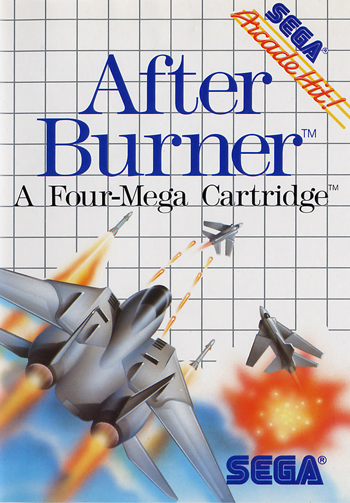
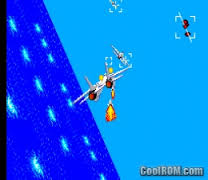
After Burner – stages 1 and 2 (sega master system)

The first couple of attempts I’m left feeling is that it? Is that worth considering for a top games list? Or am I simply remembering and romanticising the arcade version which was shaped like a fighter jet and bent and moved with the jet on the screen. And vibrated when your jet got shot.

I soon begin to realise that there is a certain amount of skill in getting to stage two without losing a plane. Or without losing more than one. To start with I just stay in first position and rapid fire at the wave of enemies like synchronised swimmers, darting back and forth in unison before me.

Then I dip to the left when they come by that side. Dip to my right as they are bound to go there next. This isn’t easy, only because the controls are clunky. The enemy lacks AI so I dare not call it intelligent, and enemy behaviour is designed so poorly I can predict even without having played it before, where their ships will go next and what maneuver they will try.

Despite this drawback, it is satisfying reaching stage two. And when I die and return to the beginning, I do still want to play again because I learned something from my mistakes. And I want to see how my new skills will be rewarded, how better I can play that first stage. Like fighting with the ghost of myself and winning.

The graphics are not so lacking. It’s not Tempest (Atari Jaguar), but the fighter jet animated, scratchy images take me back to a simpler time. The music and sound FX also remind me of that first time I played After Burner at the arcade in that massive Jet seat. Before big games like that cost $3 for one game and a game would last about ten seconds because they built them with the re-feeding of coins in mind.

So you pull up to tilt the plane upwards and climb, and you press down to tilt down and dip the front of the plane so you descend. A weakness I notice is that you can’t dip right down to the ground or climb so high you stall – lacking realism and potential for more interesting design elements.

This limits the game design, mainly because anything more would require a lot of programming to fill in all those extra design elements – the crashing of the plane into the environment, what the pilot would see if he was pointing straight up. This is a simple game, limitations are there to keep the scale down.

Shooting enemy is fairly simple. When they come into your crosshairs, press B (second action button.) You dip and tilt to aim. You also need to avoid or shoot missiles that are shot at you by some of the enemy jets and helicopters. This is easy to begin with, but the controls are a bit awkward so it can get more difficult the more enemies and obstacles you have to destroy.

Overall, it begins as a challenging and fun game for fans of retro. But it’s loaded with weaknesses, poor design and a big, dumb and clunky attitude.

Birdman (2014) – Dir: Alejandro Gonzales Inarritu (Babel, Amores Perros)

I was looking forward to this movie. It’s had quite the build-up. Everybody is saying how amazing it is and I was already aware that the director had made some impressive films leading up to this one, (which I haven’t yet got around to seeing.) So that has given substance to the myth that Birdman is a great movie. A lot of what has been said, is about Michael Keaton’s performance – his best yet, so they tell me.
I started watching the film with all this hype inside of me. Against my better judgement, I was ready to believe all of the positive voices. The start is jazzy, conversational like My Dinner with Andre but more of a character piece.
Since the film is very much about the theatre (though the story doesn’t explore anything about theatre,) the film’s style pays tribute to the theatre and the structure of the performances and story feel like a theatre piece; minimalist and well-paced, with slow-building tension and character; the story balancing on the emotional plot, with dialogue only coming from the characters as a result of their identities – no dialogue for its own sake.
I appreciate that this film is about a play, not about writing plays, making plays or directing plays – though it is a little bit about performing in plays. And the fact that, while not actually feeling like a play, it feels like it is a tribute to a play. However, I feel like it tries to say so much about the theatre and succeeds in saying very little.
Inarritu has made here an American film that doesn’t feel arrogantly or self-importantly American – there is too much interesting style and focused storytelling to get all up yourself about your own corner of the world. Broadway is mentioned a few times and it is obviously set in New York, but that kind of attitude could just as easily be English or French. It’s about culture and culture is international.
The surreal daydream of the birdman (also played by Keaton, in a birdman suit,) feels gimmicky. And the progression of this part of the plot seems unnecessary, silly and jarring because unlike the rest of the story it’s unrealistic – which is especially unfortunate in the ending.
Keaton commits to his character absolutely. The character feels honest enough for the audience to become lost inside him. He isn’t a particularly interesting character, nor is he particularly grand as a person. The portrait of the character is boring. But we see the film from this character’s point of view and if you enjoy the story it is in large part because of this.
Keaton plays Riggan who became famous as a superhero character in a comic book movie and its many sequels. This film is timely as we are being hit with a slew of comic book movies and sequels – the only trend to equal this is remakes. There just aren’t many original ideas getting made because as we all know by now, the accountants control Hollywood money. This is one reason to appreciate Birdman, as an original idea amidst a ton of junk. At least the concept is original. But the movie itself is another movie about entertainment industry and culture, and if it did that well it would be enough.
I am particularly offended by one journalist’s line in the movie, that mentions comic books in the same breath as laundry detergent commercials. And while I appreciate that there is a certain art to advertising, your average laundry detergent commercial is miles from the art of your average comic book. Here was an opportunity for Riggan to defend comic books, but that’s not the kind of man he is. He’s lost in this world of promotion and marketing.
In the end the play is something of a success, but it doesn’t really matter anymore, because Riggan doesn’t care so much now. We are Riggan. He doesn’t really care about anything anymore, so when it looks like he’s about to finally jump off the roof/out the window, it’s all we care about.
Edward Norton as Mike has a large part in the play, a mediocre sized part in the film, but his hard-on is the most memorable thing about his performance. His erection is actually quite an interesting plot device. Norton’s character is not as complex as his character’s character.
None of the women are particularly interesting. Zach Galifianakis plays it straight as Jake and manages to put on screen a somewhat interesting, honest few beats for Keaton to play against.
Birdman will live or die through the critics, which is ironic. I didn’t like it much. But what do you care?


2 stars

CQ (2001) – Dir: Roman Coppola (The Darjeeling Limited, Moonrise Kingdom)

This is a forgettable film, despite having all the elements of an intelligent, satisfying art film. It’s about filmmaking. It takes a shot at scifi (so-called genre films) but it isn’t funny, so I wouldn’t call it satire. Gerard Depardieu and Billy Zane are featured fairly prominently in this film, but their performances are ineffective due to the overall lack of expression in the story as a whole.
The movie combines daydreams, dreams and movie scenes on the one side with footage from our protagonist Paul’s personal film and the real life plot, on the other. The structure and effect of this combination works, but doesn’t feel particularly impressive.
Paul (Jeremy Davies) is a film editor, he wants to be an indie filmmaker. He gets work on a bad scifi film, but the people who he works with recognise that he contributes a lot to the film. He comes up with some of the better production design ideas. There are complications: the misunderstood genius director (Depardieu) doesn’t know how to end the film; his replacement pikes on the studio. Paul’s name is floated as the new director.
This is the story of a small, young man among the grunts in the film crew, so not particularly high in the filmmaking hierarchy. It’s true that editors these days get a significant amount of respect for the work they contribute to a film. However film editors are seen as today, this man, Paul is treated as ineffectual and irrelevant. His attitude is laid-back, kind, cautious and careful. He’s a nice guy, and this doesn’t change when he’s elevated to director – which is important, because power corrupts good men.
Even he doesn’t know how to end the film. But he begins to work on it and all along the way feels that his work is the most important thing to him. His girlfriend is beautiful, French and understands him completely – three things which together should make him grateful to be with her. But she doesn’t seem to appreciate his art, so he is almost ready to leave her, when he meets the actress – the star of the bad film that he has a job on, Code-named Dragonfly (Angela Lindvall.)
Then the film is attacked by Depardieu/genius ex-director, Andrezej – film reel with the new footage on is stolen and cut to pieces, and then another reel is stolen and there is a chase to retrieve it.
I don’t think this is a pretentious film, I think it’s interesting. The concept is intriguing. The speculation is intellectual. Unfortunately, the art is lacking; the expression is almost non-existent and the story is boring and not engaging.
Roman Coppola wrote and directed this piece. He has interesting ideas. As much as Wes Anderson annoys me, he makes interesting films as well. I think Roman Coppola should make more movies without Wes, he has his own style and he can grow into it, he can do better.
If this film had been a comedy, I might have appreciated it more, it would have been a fairly simple process to make it intelligently and consistently funny. What I would really have liked, would be to see the film express something, mean something. Tell a story with some kind of effective result, say something and say it loud.


They say respect your audience and make us care about the characters. I say fuck the audience; give me a good piece of work with an intelligent, creative, innovative and effective story – beautifully told. Express something, an idea or emotion and be thorough, eloquent and artful. But don’t do what they expect, don’t formulate mechanically, don’t give the audience what they want. This isn’t about them; it’s about you and your film.

2.5 stars

Design a site like this with WordPress.com
Get started