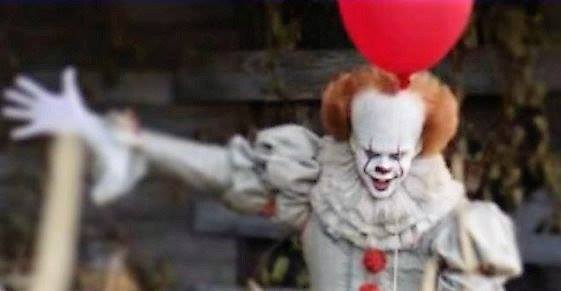
looking forward – big day today in USA for Stephen King fans!

Stephen King’s It (the first of 2 reboots) released today in USA and hopefully soon elsewhere. I’m going to wait till DVD though. Still I’m looking forward to it!pennywise.jpg

This is going to be interesting. Hopefully it will be better than the 90’s tv movie which had its strengths but reached nowhere near the depth and style, imagination and violent awesomeness of the book. The first movie (2017) has a mostly all-child cast; there are no grownup protagonists. So I’m guessing that’s how they’re doing the two movies – taking the storyline of them as kids in the first movie, then the return to Derry about 30yrs later when they’re all grown up in the sequel. I think this is a good concept, hopefully it works. And I know most people think it’s good that Beverly’s orgy scene and other choice sequences aren’t in the movie because there is probably no way they could do that (it could be done, but not by Hollywood) without being exploitative, but I do hope the sociopath sub-plot of the bullies will be in the movie. They have said that they are putting alot of the darker stuff in that was avoided in the TV movie (which was also in two parts, remember.)

My favourite scene in the book has to be the sociopath sequence with the fridge at the dump. That and the time the Losers Club fought back with stones – which was in the TV Tim Curry as Pennywise version. But it didn’t have alot of weight to it. In my opinion, one of the coolest things about the book was killing off a main character at the start of the book then pivoting away and telling an epic story of murder, love, spirit, faith and growing up.

I hope this won’t be another Ender’s Game scenario. Fans of Card’s book will know what I mean here.

on the subject of looking forward, in November in the USA Thor: Ragnarok will be released

I’m surprising myself by being more excited about this movie than I am the JLA movie. And I’m a DC fan to the core – Clayface, Green Lantern, 90’s Flash, JSA, Plastic Man, the list goes on.. I love their characters, worlds and stories. However, the teaser for Ragnarok looks like something a bit different. Whereas the teaser for the JLA movie just looks like more of the same. I’m going with different on this one, because to me that brings up other words like original and unique – two of my favourite character assets.


Tombstone (1993) – Dir: George P. Cosmatos (Rambo: part 2, Cobra)

Cosmatos has directed some really bad movies. I really don’t want to insult the guy, but it kinda feels like Tombstone is a great movie despite the director. Unless you credit him for the performances, the film isn’t directed particularly well. The story and the performances are just so bloody good that this film is fun to watch every single time, (I’ve seen it probably ten or eleven times.)

Kurt Russell is the star; Wyatt Earp the real life star of the wild west. However, everybody who knows this movie will agree, that the standout performance is Val Kilmer as Doc Holliday.

The two most famous lines:

I’m your Huckleberry.

and

Alright, Lunger. Let’s do it.

Both of these quotes are between Kilmer’s Doc Holliday and his nemesis, Johnny Ringo – the devil in black, played by the supremely misunderstood, expert character actor – who looks so much like a leading man that people have been miscasting him for years. A brilliant actor and a star without the ego – Michael Biehn.

The first quote is from a scene where Ringo gets drunk and goes looking for a fight. Only to find no one wants to mess with him. Except Doc Holliday. And when it looks like there could be a death battle, Ringo’s boss, Wild Bill reins him in and takes him inside.

Later in the film, the two have a final showdown. Ringo seems genuinely afraid of our lovable anti-hero Doc, but he won’t show it. A bit of false bravado and he tries to unleash the beast within, as he utters the famous line. And the two have a final one on one up-close and personal quickdraw gunfight. Which is over pretty quickly.

Whether it’s historically accurate isn’t really the point. It’s a powerfully effective, beautifully violent and interesting, not to mention romantic, action film without the silliness, or the massive budget – of most of Arnie’s material.

I think a better director, like say Tony Scott or James Cameron, could have made this a blockbuster movie with real guts and charm. As it is, this is still a hard movie to forget. It has some dynamite scenes and a whole shit load of sentiment.

My favourite scenes are – well yes, you guessed right the showdown between Doc and Ringo. But also when Wyatt takes the gloves off and enjoys one more ride for Wyatt Earp and his immortals.

 You tell him I’m coming, and Hell’s coming with me!

That moment is like when shit gets real. Somebody died in a bloody mess. And it was gory, tragic and sad. Wyatt is burned by this and all the mess that things have turned into. And he’s been avoiding the fight this whole time, because he just wants to retire and live happily ever after with his family. But the cowboys pushed too far, and he’s lost his nut. Now he’s going to kill them all. It’s a real balls out moment.

5 stars

True Romance (1993) – Dir: Tony Scott (The Last Boy Scout, Spy Game)

If you haven’t seen this film, I feel sorry for you. It’s a Tarantino script and his best, in my opinion. Directed by the late, great Tony Scott and starring Christian Slater in his most empathetic role (Clarence Worley) and Patricia Arquette (Alabama – that’s her name) at her sexiest and possibly, most powerful; The scene where she gets the shit kicked out of her by Tony Soprano (James Gandolfini) is forever etched in my brain.

Technically, it’s an action film; but really, a contemporary romance about sex, drugs and rock and roll – from the mind of possibly the most relevant filmmaker of the time. And directed by one of the world’s best directors of emotionally affecting action movies.

Clarence (Slater) falls in love with a call girl (similar to a prostitute) and decides to kill her pimp so they can get married and run away together. It’s a wonderful idea, but things don’t exactly turn out as he had hoped.

A road movie to the bone, but more romantic and beautiful than the more artistic and pulp – Pulp Fiction.

Standout bit parts by Dennis Hopper – a retired cop, Christopher Walken – the gangster, Val Kilmer as Elvis (is brilliant), Bronson Pinchot as a pathetic assistant (who introduces Clarence to the buyer played by the truly great character actor – Saul Rubinek), Gary Oldman – the pimp and Brad Pitt as a stoner called Floyd.

What else do you need? Watch it now! It’s got balls! True Romance is a beautiful story about love in today’s world; a world of greed, violence, moral degradation, the destruction of family values and death around every corner.

Among the best elements in this film are: It tells a story about an uncool guy who just wants to be cool. But he’s painted as the coolest man alive – perhaps because the narrator of the story is the woman who’s in love with him (and because Tarantino may have been writing a bit about himself.) It starts off – about a guy who lives an ordinary, nerdy life and doesn’t get out much. He’s not the kind of guy you’d expect to go on a murder spree, for example. But his imaginary friend, Elvis is also his consul and tells him what he needs to hear to take violent action to solve the immediate problem (the pimp.) Things escalate from there. But these two are not psychopaths like the pair in Natural Born Killers or Kalifornia. Rather, everybody else seems to be either violent cold-blooded killers or cold-hearted police. And all Clarence and Alabama want is to attempt to survive. They don’t kill anyone, except in self-defense, and nobody who doesn’t deserve it – at least that’s the viewpoint that we witness.

The writing is fiercely colloquial and clever, interesting, poetic and fast. The directing is beautiful in cinematography, framing, structure and the style of the performances. The structure is basic, but it doesn’t need to be anything else, it also doesn’t call attention to itself. It’s really about the characters; their motives and struggle. None of the characters are without depth, even Floyd is vital to the story and an interesting character and he plays probably the smallest part in the film.

The plot is more straight-forward than Pulp Fiction, you don’t have to be clever to ‘get it’. However, that doesn’t make it predictable. The writer is smart enough to throw in things you wouldn’t expect and weave the narrative into a satisfying and exciting journey. Anybody could get killed – like in The Sopranos. Anybody could win. Anybody could lose everything. I feel the point of this film is that love is the answer, though. Even in the world of the time, full of violence, danger, tragedy and struggle – love can still break through all the mess and make it a journey worth travelling. And I for one am drawn to these characters, even the bad guys. I care about these characters as if they were myself.

Tarantino makes a point of juxtaposing an ugly, broken, smoggy, slummy city world with characters who are fighters that you want to root for and they are people with real heart. Hate the world, love the person. It may not be as unique as a film like Lynch’s Mulholland Dr. or Cronenberg’s eXistenZ, but it’s beautifully written, beautifully told and it really transcends the genre of contemporary love story/action film. Two opposing genres (one aimed at women, the other at men) perfectly mixed into one luscious story.

5 stars

My Top 5 Movies of the 90’s (a series of articles)

Top 5 movies of ’93, ’94, ’96 and ‘99

1993

  • True Romance
  • Tombstone
  • Dazed and Confused
  • Jurassic Park
  • The Nightmare Before Christmas

1994

  • Night of the Demons 2
  • Oleanna
  • Brainscan
  • Airheads
  • Shallow Grave

1996

  • Tromeo and Juliet
  • Basquiat
  • Crash
  • Trainspotting
  • Scream

1999

  • Sunshine
  • Galaxy Quest
  • Audition
  • The Boondock Saints
  • eXistenZ

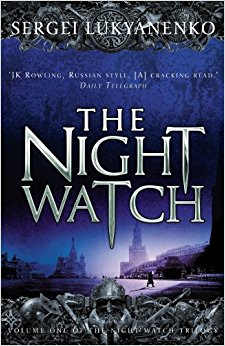
Nightwatch (the watch trilogy: book one) By Sergei Lukyanenko

Originally Published in Another Language (Russian)

Others, they walk among us. Others are magicians, sorcerers, shape-shifters, demons. Those who use magic. Who see the twilight. Who have great power, power that allows them to live a life beyond what we know as ordinary. They serve the dark, or the light – or they have yet to decide their own destiny. Eventually their choices in life will decide for them.

On each side, there is a policing faction – called The Watch. The Night Watch are light Others, who police the dark Others at night. And the Day Watch are dark Others, policing the Light at day.
Our protagonist is a light other, a mid-level magician and member of the Night Watch. Inside all of this magic, war and power is a very complicated mystery/spy story – told in almost a detective novel style.
Lukyanenko has created a quite unique magical hierarchy and world; with some fascinating characters – lovers, pawns, heroes and leaders of the revolution/rebellion/domination. He provides us with a story about a man, who has chosen his path, but doesn’t quite know what to do with it – Anton. 
We are seeing the war between light and dark from the point of view of mere pawns in the struggle; after a treaty has been signed long ago – an agreement between both sides to obey a permanent order of laws. These laws dictate that without permission, without bureaucratic means, no action can be taken by either side which affects ordinary lives (outside of what is allowed) – if this happens, the Watch will hold the accused accountable. These laws are strict, and for the guilty, punishment is almost always permanent death. (Death is different for Others, for example some Others are vampires who do not ordinarily die. A permanent death would be for some, disintegration. For others, lost in the Twilight. Decided on a case by case basis.)
The Twilight is a way of seeing that is only available to Others, but it is also a physical anomaly. The twilight has many layers; the deeper you get, the more likely you will die before you can get out. The first layer of twilight basically allows you to see the magical appearance over the physical appearance of the world. Greater magicians have more skill at getting down deep into the twilight. And the Twilight behaves the same and is the same and one thing to both light and dark. However, when one is in the twilight, one’s true self is visible to others who are also in the twilight within viewing distance.
The magic in this story is thoroughly designed and examined. Curses, arrangements between dark and light, the struggle for one’s destiny, the struggle to be a good person, the responsibility of being a watchman, all of these are really interesting concepts, and beautifully conceived, carefully revealed.

But the tightest line of this story is one man, his lover and his job – all directed towards trying to do what he thinks is right, and solve the mystery; the conspiracy by the greatest magicians in the world; The leader of the dark ones, Zabulon and the leader of the light, Gesar.

Speaker for the Dead (Beyond Ender Series) by Orson Scott Card

Speaker for the Dead is the first book in the Beyond Ender series, but it is also a standalone sequel to the Hugo and Nebula award-winning science fiction epic novel, Ender’s Game. Speaker also won both Hugo and Nebula awards.
Ender’s Game was about Andrew Wiggin, a gifted young boy, whose mind was his greatest asset. Because he was the third child, under government enforced breeding restrictions – if he was suitable as a soldier, the government could take him from his family to a place in Space called Battle School where he would be trained to fight, to lead, to command – against the aliens called Buggers who when first discovered, attacked and killed many humans years before.
The Buggers were defeated by luck and one hero – Mazer Rackham, during the First Invasion. It was expected that they would come back, and Earth needed to be ready. So Andrew, Ender – a nickname his sister, Valentine gave him when they were kids, was trained to become a brutal weapon against the aliens, to prepare for the Second Invasion. What he didn’t know is that the games he played in Command School were actual battles taking place via ansible (like faster than light speed internet.)
He destroyed the buggers, won the war and blew up their home planet in the first book.
But the more he learned about the buggers, the more he realised that this war was a mistake and that he loved the buggers. So he wrote a book which began a religion – Speakers for the Dead – who talk about the lives, choices and desires of those who died, in order to fully understand and love those who have died. His book enabled the world to love the buggers, and as a result they hated Ender, calling his war, Xenocide.
The original Speaker for the Dead, Andrew Wiggin is also Ender, but nobody knows this. The discovery of the ansible was mostly accident, it was something called philotic strands that the buggers used and left behind when they were defeated and killed. The humans don’t know how it works, but are able to use this scientific discovery to provide instantaneous communication via ansible and also faster than light travel using the same technology, but it is expensive. Andrew is rich, though and he has powerful friends. Now an outcast, he travels the Universe speaking for the dead – and, unknown to the rest of the world, looking for a place to hide the cocoon of the last bugger queen, so she can be reborn.
History is about to repeat. The first discovery of an alien species since the buggers, has come about on Lusitania; a planet under Catholic licence. But some scientists were tortured to death by this new alien species – Pequeninos, called the Piggies. And people are starting to hate again, war will come.
So Andrew decides to go there to learn to love the Piggies and save them. And perhaps this will be a place where he can save the Buggers as well. But Andrew’s main reason for visiting Lusitania is a young girl, Novinha. She will be middle-aged by the time he gets there in 2 weeks – due to relativistic travel. Her parents were killed while discovering the cure to a plague which almost wiped out Lusitania’s people years before. There is sadness, and suffering in her face. Andrew loves her, and he wants to go to her, to try and save her also. And perhaps earn redemption for the Xenocide.
Speaker for the Dead is about religion, redemption, anthropology, history, war, politics, love, betrayal, suffering, technology, aliens, and family.
Ender’s Game was about a brilliant tactician who is also a young boy, who lives a life that is more vicious and violent than most grown men live. And he does this because he is Earth’s only hope to survive.

Speaker for the Dead undoes everything that Ender’s Game creates, and yet takes nothing away from the power of the first book. These and all books in the Ender series and Beyond Ender series can be read in any order, and are each standalone stories. My advice is to read in this order: Speaker for the Dead, Ender’s Game, Ender’s Shadow, Xenocide, Children of the Mind.

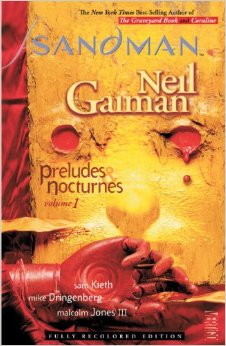
Graphic Novel – The Sandman: vol. 1, Preludes and Nocturnes by Neil Gaiman

I am new to Neil Gaiman and to the hit graphic novel series The Sandman. Although I am familiar with the character who inspired the series (The Sandman from DC comics’ Justice Society of America – the very first superhuman team, preceding the great and wonderful Justice League of America and written in the same world. In fact some of the JSA characters have stuck around long enough to enjoy small roles in Justice League stories and a few characters like Michael Holt aka the second Mr Terrific and Alan Scott, the first Green Lantern as well as Dr Fate – were gifted with major roles in other DC properties such as Checkmate and Justice League International) and I have wanted to read Gaiman and his Sandman ever since I first learned of his works when he wrote a book called Good Omens (which I didn’t read) with Terry Pratchett.
All of my friends and associates would rave about Gaiman and assured me I would love his work, based on what they already knew about my tastes. I didn’t doubt them, I simply never found myself in a situation where I could read his work. Until now; I paid my fifty cents and borrowed the first volume of The Sandman from my local library. I was excited, despite myself. This was a challenge, this was a new experience, here was a new author, here was a story that most people thought was good and the people who thought so were my kind of people as well.
You want to know if I liked it? Well, I will let you off the hook, I did and then some. But I want to express and explain to you what finally discovering Neil Gaiman’s most famous work was like for me as an experience. There are some books that are incredibly easy to read, entertaining, funny and you consume by the truckload – I would think of Terry Pratchett’s Discworld novels as an example. Other books are thick with a unique kind of language, not so easy to read, but rewarding and massive depth to the stories – Greg Egan’s novels come to mind. Then there are books that you laugh and grin evilly because you know the secret, you’re almost too excited to read, that you readjust yourself and jump in your seat – you have realised that this is a wonderful author who is doing something new and exciting with his stories and you are actually in a love affair with his work. I feel this way about Orson Scott’s Card’s Ender’s Saga and Beyond Ender’s Saga – and I felt this way when I finished reading the first volume of Gaiman’s Sandman – he calls it Preludes and Nocturnes.
This graphic novel is a collection of the first few single issue comic books in the series; it also comes with a forward written by Sandman’s original publisher, Karen Berger. I feel it is essential that violence be innovative. Here, the violence, if not particularly shocking, is inventive, interesting, guided by the story and necessary. The bad guys are intriguing, but not yet scary. I think there is room for improvement – which hopefully happens in the books that follow in this series. According to Berger, this first volume is only the beginning, so I certainly look forward to more.
A group of inept magicians cast an incantation to attempt to summon and bind Death. However, instead they receive our title character, Dream; the sandman. Despite the fact that this was a mistake, they decide their only option is to keep him imprisoned until he agrees to grant them power and promises to not seek revenge. He waits them out. Dream can wait a long time. He is one of the endless; one of the few elite characters in the story of the Universe, who never die; immortals whose responsibility is to curate life. To each keep their tasks in order, to maintain existence as it has always been. Without these immortals there would be no life, only chaos.
Upon trapping dream, the magicians also steal his toys; artefacts which he has filled with some of his power in order to use them as tools in his craft. Because he has used them in this way, the artefacts are magical.
Dream stays imprisoned for a very long time. His captors grow old and die, his toys are stolen, lost, scattered. Eventually we realise that the Sandman is not simply an antagonist, or a voice for the story, but is the central character. And that, people who choose to mess with the structure of reality, effect consequences which are felt by all mankind; that summoning Dream with the ambition to trap Death and earn power is about the most selfish act one could take. Dream is more fearsome than the Grim Reaper, yet he is simply trying to put things back as they should be. The punishment for those involved will be harsh, but deserved. The Sandman’s power is unequalled, but he has been down there a long time, weakened, starving, forced into an absence of action/reaction. It won’t be forever and he is patient.
Dream’s powers are hinted at for a while, eventually we get to see what he can do and this does not disappoint. One of the coolest things about the writing of this story is finally getting to see the Sandman unleash his powers on people; to see how absolute power (but only over dreams) can be used. The Sandman’s most useful skill is in fact his cleverness; his smarts are like those of a chess player. Yes, he is a very powerful character, but sometimes he is weakened, or his power is compromised for one reason or another. It’s due to his intense cleverness that he is able to negotiate the problems he tackles and always come out on top, when he does use his powers (we get to see the innovative ways he can slay or punish) it is the flexibility and ingenuity of his mind that make him so powerful, not simply that he has absolute power over dream (also he is not always at full power; sometimes he is vulnerable.)
The characters are the most dazzling element of this graphic novel. I didn’t expect the Sandman to be such an interesting character; deep, complex, cool yet vulnerable, powerful yet humble. The story is a bit straight forward; mostly concerned with the binding/kidnapping of the Sandman and the effects of that on the world, of when he gets free – punishing his captors and finding his toys. But the way these scenes and sequences are written is fantastic.
One of my favourite scenes is when Dream is forced to visit Hell to reclaim a toy that was gifted by a man to a demon. So Dream has to mind-fight the demon which is a really cool sequence; again some great characters in Hell – the demon, Lucifer, and the rest of the triumvirate. I love to see Dream using the power of dreams in creative ways; one time he punishes the descendant of his captor with ‘eternal waking’; which is when you think you’re awake then you wake up – nightmares within nightmares; in my opinion his creative choice of punishment is probably one of the worst punishments anyone could have dealt.
A central character to the sequence about cleaning up the mess that formed in Dream’s absence, started out as a comic book villain in the DC world, but is recreated here as a horror villain. He is really interesting. His origin story and the scene where he escapes Arkham Asylum are really cool, but the peak of his storyline is probably when he manipulates a scene like something out of Stephen King, where regulars in a café begin behaving like morally bankrupt lost souls and sex, violence and death ensues.

Overall, I think the writing is excellent, very imaginative and original but also thorough and clever. I think the story is good as a setup, though not the most original concept or structure. I think the art is very effective in creating the tone to match Gaiman’s story, but not mind-blowingly artful. I think the characters are the strongest element in this book – and the cleverness, or otherwise effectiveness of these characters is due to great writing. This book is highly re-readable and I’m very excited about reading more of this series.
CREWING FOR MOVIES – AN EXPERIENCE

The Beast – a good scene, a failed short movie (2000)

When I first started making movies, I was inexperienced, so I didn’t realise how difficult making short movies would be. So I would write these epic, intricate, sweeping, complex stories. Then I would shoot the first few frames and I would find that I couldn’t actually shoot what I had envisioned. I had to improvise. Stay sharp, keep moving.

One of the short movies I made as a student was called The Beast. It was about a deformed man who could control the essence inside water. So he could control water and through water, could control anything that used water. I even at one point had him cause a tsunami filled with razor blades. Imaginative, yes. Practical, no. I had one shot where I was going to drench my two flatmates and throw a bucket of razor blades at them. They weren’t too keen and I was pretty sure it wouldn’t show up properly on camera – even when I swapped the razor blades for pieces of silver-painted bits of cardboard and promised to throw the water in front of them, instead of over them. This looked even worse than my original intentions would have.

The one really nice thing about this movie was a scene that wasn’t all that important in the script. It was a scene where the title character smoked a joint in his hut and went a little nuts, excited by his new-found powers. The first thing that went right was the lighting. I wanted to use natural light and I found a dirty laundry at my mate’s flat, behind their house. It was cramped and dimly lit on a hot Summer day, it was perfect. I took the scene from the script and wrote a shooting script to describe the visual storytelling frame by frame, moving the camera with the plot.

The cramped nature of the location stunted the camera moves, and this restriction was a catalyst for my creativity. I prepared the “joint” for the actor and his delight fed the scene. There wasn’t much for the actor to do. It was one beat in many frames. The only weakness of the scene was the wig I gave him to wear, because I wanted the Beast to have long, shaggy hair.

I ended up deleting this scene accidentally, so it’s gone forever. But I watched it on a television screen after we finished editing the film together. Other students complimented me on the lighting and the professional look of the scene. I hope to find a similar flash of inspiration/competency in filmmaking again some day.

CREWING FOR MOVIES 2 – AN EXPERIENCE

The Poltergeist Movie: Part One (script development)

Somewhere in the middle of 2010, I put an advert on the New Zealand Art and Creative Website called The Big Idea – my advert described an opportunity to make a short movie without a budget – my ad explicitly stated that I had a mini digital video camera (not professional standard, but not shoddy – Canon MVX100i) and that I valued keenness over experience – and that due to there being no budget, no one was getting paid. There were ten or so responses to the advert. When I held a meeting to discuss the project, about nine people showed up.

I had never run a meeting before, so I was making it up as I went along. I stated as much and when asked whether there was a script and what the script would be about, my response was that no, I specifically had decided not to write a script for the project. All of my big ideas for movies were committed to major projects – novels and such. I was interested in overseeing the script process, but I wanted to get ideas for what to shoot from the team. This was to be a somewhat democratic process.

Four people showed up to the second meeting – this was my crew.

At first, most people hung back from the conversation, unsure if any contribution might be bullied down and ignored. But eventually, after a few beers, people began to open up. I was pushing the attitude that the subject and premise of the movie really didn’t matter. It would all come down to the script and the implementation. It never matters what the movie is about, or what your story’s starting point is. This seemed to take the pressure off coming up with ideas and people started contributing.

The biggest push was for some kind of suspense movie with – for example an alien invasion. Keeping in mind that we had no budget, we had a few goes at trying to figure out how we might shoot something like that, without it looking lame. We agreed the best way to do any movie of that kind would be by showing as little of the “creature” as possible as in Ridley Scott’s Alien.

Eventually it was decided that there was no way to make a realistic alien on a zero budget, so I had the idea of making the creature a poltergeist, instead of an alien. And we began to turn over ideas about how we could shoot a poltergeist and what might happen in the film. After the meeting I secluded myself for a few weeks, writing an eight-page script – a classmate of mine who was at the meeting, and myself were taking it in turns to write the script for the shorts we were going to make. It was my turn, and every couple of days, I emailed a copy of the script in progress to everybody who was involved in this project.

I took notes and suggestions on board and the girl who was keen to direct the movie found us some actors, while one of the guys did some SFX research so we could have some cool things happen in the story. – As it wasn’t going to be a dialogue movie and short films have to engage the audience in some way, in a short time. Usually there isn’t much opportunity for a complex plot.

CREWING FOR MOVIES 3 – AN EXPERIENCE

The Poltergeist Movie: Part Two (Principal Photography)

On day one of the shoot, our SFX guy had done some research and had found out that cooked pumpkin-mush mixed with red food colouring can give the effect of blood and guts. We mixed the red food colouring with some blue, to darken it. I cooked a pumpkin, and on set we separated the mash – this was a little tricky. I had boiled the pumpkin myself and it was still a bit hard.

We ended up with some gross looking stuff that was going to be a projectile shot out from the drain pipe of the sink. We couldn’t take the sink apart to perform this effect, so we relied on tricky camera angles. There were other sequences we needed to shoot that day as well. And we had run out of actors. I asked my flatmate to fill the void, mainly because I felt that anyone can act in a pinch. Not because I thought he was particularly dramatic or photogenic – neither of which he was.

I soon discovered just how difficult it is to try and force a square peg into an acting opening. He couldn’t remember his one short line. He couldn’t take direction. He couldn’t follow simple suggestions. Even when wound up, he refused to use his emotion for the performance, when the camera was on. He was the worst actor I’ve ever worked with, and I wasn’t even directing, so mine was a fairly objective opinion.

However, we ended up with some semi-usable footage. To fill the space of the inciting incident, the catalyst responsible for bringing forth the poltergeist (not that having one was mandatory) – we decided to use a seance. Our SFX guy built a Ouija board. It actually looked pretty good.

When we met again at the second set to shoot the first few scenes leading up to the seance, I had brought with me some extra equipment. A skateboard for a tracking shot. And a floodlight, for dramatic lighting.

We shot the sequence where one of the characters wakes up, gets out of bed and interacts with the flatmates, just to set the calm of the scene opening. At the end of a day’s shooting we had some pretty half-decent footage. However, when I checked the light I realised that, having set it up on the floor, the heat of the light had burned a hole in the carpet. I apologised to the location’s inhabitants and we quickly escaped. Had I to work with those lights again, I would purchase some rigging to stand the light off the floor.

Design a site like this with WordPress.com
Get started